Why is My Wall Outlet Not Working But Others are Fine

Have you ever plugged something into your wall outlet only to find it’s not working, while all the others nearby seem fine? It’s frustrating, confusing, and sometimes even a little worrying.
You might wonder if it’s a simple fix or a bigger problem waiting to happen. The good news is, most of the time, the issue is easier to solve than you think. You’ll discover the common reasons why your outlet isn’t working and what steps you can take to get it back up and running quickly.
Keep reading—you’ll be surprised how simple the solution can be.
Credit: www.bobvila.com
Common Causes Of Outlet Failure
Wall outlets sometimes stop working while others stay fine. This can be confusing and frustrating. Understanding common causes of outlet failure helps you fix the problem safely. Many issues are easy to check without special tools. Knowing what to look for saves time and money.
Tripped Circuit Breaker
Circuit breakers protect your home from electrical overloads. A breaker might trip if too many devices run on one circuit. This stops power to some outlets but not all. Resetting the breaker can restore power quickly. Always switch off appliances before resetting for safety.
Blown Fuse
Older homes may have fuses instead of breakers. A fuse blows when there is too much electricity flow. This cuts power to outlets on that fuse’s line. Replacing the fuse with the right type fixes the issue. Never use a fuse with a higher rating than recommended.
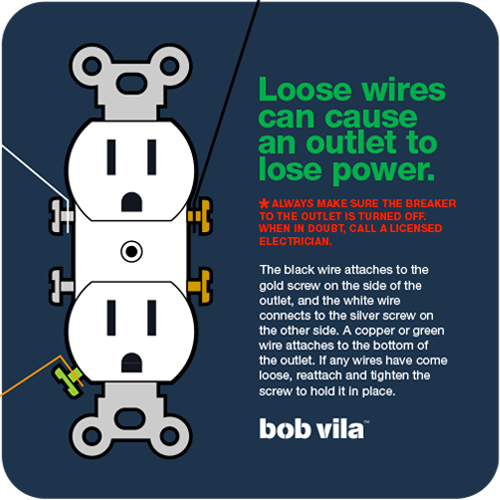
Loose Wiring Connections
Loose wires inside the outlet or electrical box cause power loss. Wires can loosen over time or after repairs. This creates an incomplete circuit, so the outlet stops working. Tightening connections often restores power. Turn off the main power before checking wires.
Faulty Outlet
Outlets wear out from use, heat, or poor installation. A faulty outlet may not hold plugs firmly or supply power. Replacing the outlet is a simple fix. Use a tester to confirm if the outlet is bad before replacing it.
Testing The Problem Outlet
Testing the problem outlet helps find the cause of the issue. It shows if the outlet itself has a fault or if there is another problem. Simple tests can tell you if power reaches the outlet and if it works correctly.
Try these easy steps to check the outlet safely and quickly.
Using A Voltage Tester
A voltage tester tells if electricity flows through the outlet. Touch the tester’s probes to the outlet slots. If the tester lights up or beeps, power is present. No light or sound means no voltage. This tool helps spot if the outlet has power or if wiring may be broken.
Checking With A Lamp Or Device
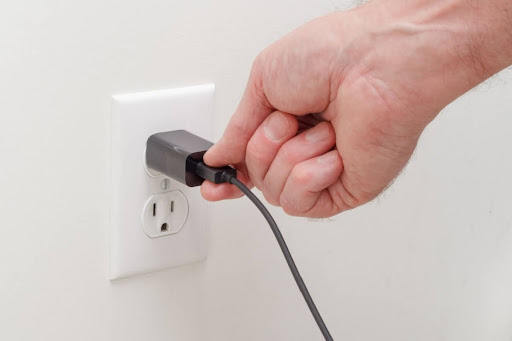
Plug a lamp or small device into the outlet. If it turns on, the outlet works. If not, try the same lamp or device in a different outlet that you know is good. This test shows if the outlet has a problem or if the device is faulty.
Inspecting For Visible Damage
Look closely at the outlet for cracks, burn marks, or loose parts. Damage can cause the outlet to stop working. Check if the outlet feels warm or smells strange. These signs often mean the outlet needs repair or replacement.
Resetting Gfci Outlets
Resetting GFCI outlets is a key step when one wall outlet stops working while others remain fine. GFCI outlets protect people from electric shock by quickly cutting off power during faults. They often control multiple outlets on the same circuit. A tripped GFCI can cause one outlet or several to lose power.
Knowing how to reset a GFCI outlet can restore power safely and easily. This process is simple and does not need special tools. Understanding GFCI outlets helps solve outlet problems faster.
Locating Gfci Outlets
GFCI outlets look different from regular outlets. They have two buttons labeled “Test” and “Reset.” These outlets are usually found in places with water nearby. Kitchens, bathrooms, garages, and outdoor areas often have GFCI outlets.
Check all GFCI outlets in the room or nearby rooms. Sometimes, one GFCI outlet controls several others. Finding the right GFCI outlet is the first step to fixing the problem.
How To Reset A Gfci
Press the “Reset” button firmly until it clicks. The button should stay in. If it does not, press the “Test” button first, then try resetting again. This restores power to the outlet and any connected outlets.
After resetting, test the outlet by plugging in a small device. If it works, the problem is fixed. If not, try resetting other GFCI outlets on the circuit.
When Gfci Affects Other Outlets
One GFCI outlet can protect multiple outlets on the same circuit. If it trips, all connected outlets lose power. This may explain why only one outlet stops working while others work fine.
Check all outlets controlled by the GFCI. Resetting the main GFCI outlet often restores power to all affected outlets. This can save time and avoid unnecessary repairs.
Safety Precautions
Safety comes first when dealing with electrical outlets. Faulty outlets can cause shocks or fires. Always take care before touching any electrical part. Knowing the right safety steps helps protect you and your home. Here are key precautions for checking a non-working outlet safely.
Turning Off Power Before Inspection
Always switch off the power at the circuit breaker. Do not rely on the outlet’s switch alone. Use a voltage tester to ensure no current flows. Never touch wires or metal parts with power on. This step stops electric shocks and other dangers.
When To Call An Electrician
Call a professional if you see sparks or burning smells. If the outlet feels warm or has visible damage, stop using it. Problems inside walls or complex wiring need expert help. Avoid fixing major issues yourself to stay safe. A licensed electrician knows how to handle risks properly.
Preventing Future Outlet Issues
Preventing future outlet issues helps keep your home safe and functional. Simple steps can stop problems before they start. Regular care and smart choices protect your wiring and devices.
Regular Outlet Maintenance
Check outlets often for damage or loose parts. Clean dust and dirt from outlet surfaces. Use a tester to ensure outlets deliver power safely. Replace outlets that show wear or burn marks.
Avoiding Overloading Circuits
Do not plug too many devices into one outlet. Spread electrical devices across different outlets. Know the power limits of each circuit. Overloading can cause outlets to stop working or trip breakers.
Upgrading Old Wiring
Old wiring can cause frequent outlet failures. Have an electrician inspect your home’s wiring. Upgrade outdated wiring to meet current safety standards. New wiring improves outlet performance and reduces risks.
Credit: www.parkshvac.com
Credit: www.reddit.com
Frequently Asked Questions
Why Is One Wall Outlet Not Working But Others Are Fine?
A single outlet may have a tripped breaker, loose wiring, or a faulty outlet. Other outlets on different circuits remain functional. Check your circuit breaker panel and reset if needed. Inspect the outlet for visible damage or consider calling an electrician.
How To Fix A Non-working Wall Outlet Safely?
Turn off the power at the breaker before inspecting. Use a voltage tester to confirm no current. Tighten loose wires or replace the outlet if damaged. If unsure, consult a licensed electrician to avoid electrical hazards.
Can A Tripped Gfci Affect One Outlet Only?
Yes, GFCI outlets control multiple downstream outlets. If the GFCI trips, some outlets stop working. Reset the GFCI by pressing its reset button. If outlets remain dead, the GFCI or wiring may need professional inspection.
Why Does An Outlet Stop Working After Power Surge?
Power surges can damage internal outlet components or wiring. This causes the outlet to stop supplying power. Replace the damaged outlet and consider surge protection devices to prevent future issues.
Conclusion
A single wall outlet may stop working while others stay fine. This often points to a tripped breaker or a loose wire. Checking the breaker box is a quick first step. Sometimes, the outlet itself needs replacement. Safety matters—turn off power before any fix.
Small problems can cause big frustration. Understanding these basics helps you solve issues faster. Don’t ignore the signs; a working outlet keeps your home safe. Taking simple steps can save time and money. Keep your outlets in good shape for daily comfort.