Why is My Wooden Door Swelling And Hard to Close in Humid Weather

Have you noticed your wooden door suddenly swelling and becoming tough to close whenever the weather gets humid? It’s frustrating when a door that used to glide smoothly now sticks or jams, making everyday life a bit more annoying.
You might wonder why this happens and if there’s a way to fix it before it gets worse. Understanding what causes your door to swell in humid weather is the first step to solving the problem and protecting your home.
Keep reading, and you’ll discover simple, effective tips to keep your wooden door working perfectly no matter the weather.
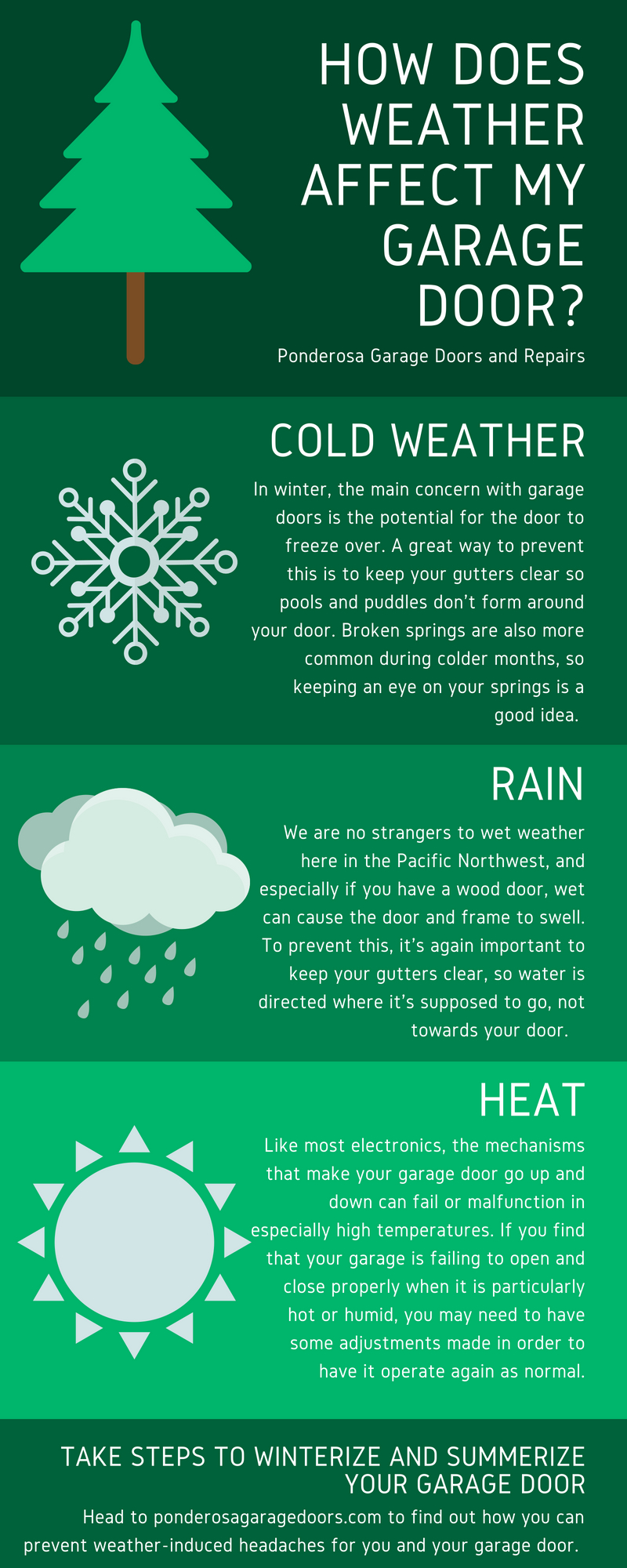
Credit: ponderosagaragedoors.com
Causes Of Door Swelling
Wooden doors often swell and become hard to close during humid weather. This swelling happens because wood naturally reacts to moisture in the air. Understanding the causes helps in managing and preventing door swelling issues.
Wood Absorbs Moisture
Wood is porous and acts like a sponge. It soaks up water vapor from the air. This moisture causes the wood fibers to expand. The door swells and may not fit its frame properly. This is the main reason for swelling in wooden doors.
Humidity Levels And Wood Expansion
High humidity means more moisture in the air. Wood absorbs more water in these conditions. The higher the humidity, the more the wood expands. This expansion causes the door to stick or become hard to close. Low humidity makes wood shrink back to normal size.
Effects Of Seasonal Changes
Seasons affect humidity and temperature. Summer brings high humidity and wood swelling. Winter usually has low humidity, causing wood to shrink. These changes cause the door to expand and contract repeatedly. This cycle can damage the door over time.
Types Of Wood And Their Behavior
Wood reacts differently to humidity based on its type. Understanding wood behavior helps explain why doors swell in moist weather. Wood’s natural structure absorbs water, causing expansion. Some woods handle moisture better than others. The way wood is made and treated also affects its response to humidity.
Solid Wood Vs Engineered Wood
Solid wood comes from a single piece of timber. It swells and shrinks more with moisture changes. Engineered wood is made by gluing layers together. It resists swelling better than solid wood. Doors made of engineered wood stay more stable in humid weather.
Wood Grain And Moisture Absorption
Wood grain direction affects moisture absorption. Wood absorbs water faster along the grain than across it. Open grain woods soak up more moisture and swell more. Closed grain woods absorb less water and swell less. Grain patterns influence how much a door changes size.
Treatment And Finishes Impact
Treatments and finishes protect wood from moisture. Varnishes, paints, and sealants create a barrier. This barrier reduces water absorption and swelling. Untreated wood doors absorb more moisture and swell easily. Proper finishing extends door life and improves performance in humidity.
Signs Of A Swollen Door
Swelling in wooden doors happens often in humid weather. It causes many problems for homeowners. Recognizing the signs early helps to fix issues before they get worse. A swollen door shows clear changes you can notice with your eyes and hands.
These signs warn that the wood is absorbing moisture. It expands and loses its original shape. Knowing these signs keeps your door working smoothly and lasting longer.
Difficulty Closing Or Opening
One common sign is trouble closing the door. The door might stick or not fit the frame well. Sometimes it feels heavy or tight when opening. This happens because the wood swells and fills gaps.
You may need to push hard or jiggle the door. It no longer moves freely as before.
Visible Warping Or Bulging
Swollen doors often show warping or bulges. The surface looks uneven or curved. You might see parts of the door sticking out more than usual. This happens when moisture causes wood fibers to expand unevenly.
Look closely at the edges and panels for changes. These visible signs confirm the door is swollen.
Changes In Door Fit And Alignment
The door may not align well with the frame anymore. Gaps appear in places where none existed before. The latch might miss the strike plate or rub against the frame. These changes make the door less secure and harder to use.
Check the door’s fit regularly to spot swelling early.
Preventing Door Swelling
Preventing wooden door swelling in humid weather saves time and money. Moisture causes wood to absorb water and expand. This expansion makes doors hard to close or open. Simple steps help keep doors in good shape all year.
Proper Sealing And Finishing
Apply a quality sealant on all door surfaces. Seal both sides and edges to block moisture. Use paint or varnish designed for wood protection. Check for cracks or chips and fix them quickly. Proper finishing stops water from entering the wood.
Controlling Indoor Humidity
Keep indoor air dry with a dehumidifier or air conditioner. Ventilate rooms to reduce trapped moisture. Avoid drying clothes indoors near doors. Controlling humidity lowers the chance of door swelling.
Routine Maintenance Tips
Inspect doors regularly for swelling signs or damage. Tighten loose hinges to prevent extra pressure. Sand down areas where the door sticks. Reapply sealant every few years for lasting protection. Routine care extends door life and prevents problems.
Fixes For Swollen Doors
Swollen wooden doors cause frustration. They stick and become hard to close. Humid weather makes wood absorb moisture. This leads to expansion and warping. Fixing swollen doors requires simple steps. These methods help restore smooth door function.
Sanding And Planing Techniques
Start by identifying swollen areas on the door. Use fine-grit sandpaper to gently sand the edges. Sand evenly to avoid uneven surfaces. For larger swelling, a hand planer works well. Remove thin layers of wood slowly. Check door fit after each pass. Stop once the door fits smoothly without sticking.
Adjusting Door Hardware
Swollen doors can press against the frame. Tighten or loosen hinges to create space. Use a screwdriver to adjust hinge screws. Move hinges slightly if needed. Check the strike plate on the frame. Adjust it to align with the latch. Proper hardware adjustment helps door close easily.
Using Dehumidifiers And Ventilation
Control moisture inside your home. Use a dehumidifier to reduce indoor humidity. Keep rooms well ventilated by opening windows. Fans help air flow and dry moisture. Avoid long periods of closed, humid spaces. These steps prevent wood from absorbing excess moisture.
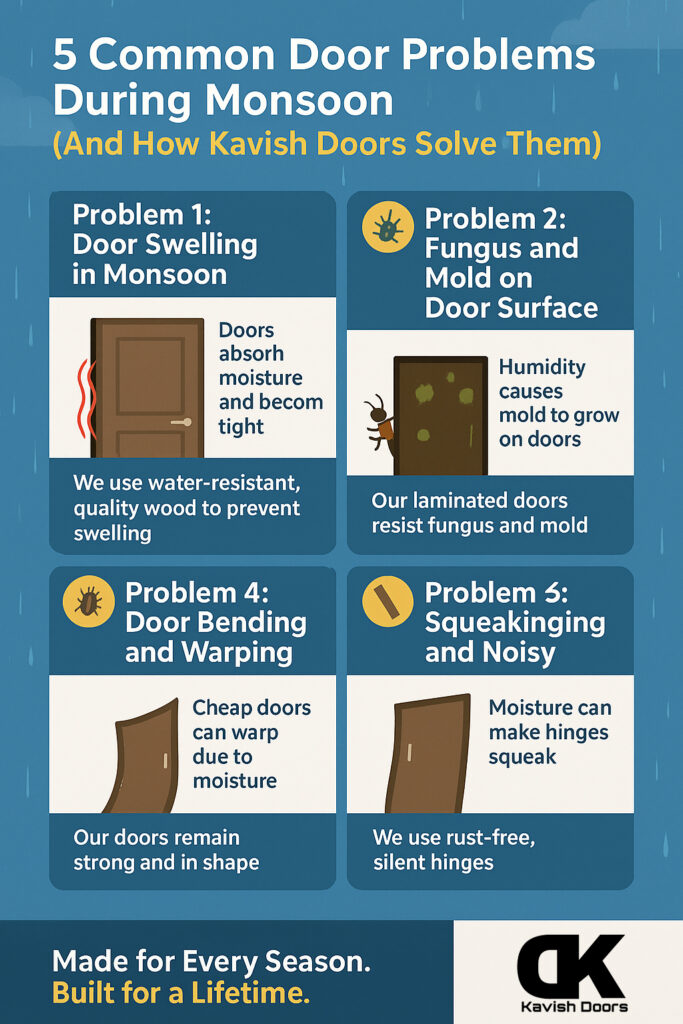
Credit: kavishdoors.com
Long-term Solutions
Wooden doors often swell in humid weather due to moisture absorption. This makes them hard to close and affects your home’s security and comfort. Long-term solutions help stop swelling and keep doors working well all year. These fixes prevent future problems and save money on repairs.
Replacing With Moisture-resistant Doors
Choose doors made from materials that resist moisture. Fiberglass or composite doors handle humidity better than wood. These doors do not swell or warp easily. They keep their shape and fit tight in all weather. Though cost is higher, they last longer and need less upkeep.
Installing Weather Stripping
Weather stripping seals gaps around the door frame. It blocks moisture from entering and reduces swelling. Use foam or rubber strips that fit your door size. This simple step improves door function and saves energy. Replace weather stripping every few years for best results.
Professional Repair Options
Experts can fix swollen doors without full replacement. They trim swollen edges or sand the door surface. Professionals also treat wood with sealants to stop moisture. Repair costs less than new doors and extends door life. Call a carpenter or door specialist for help.
Credit: watersonusa.com
Frequently Asked Questions
Why Does Humidity Cause Wooden Doors To Swell?
Wood absorbs moisture from humid air, causing it to expand. This swelling makes the door larger and harder to close properly.
How Can I Prevent My Wooden Door From Swelling?
Use weatherstripping, sealants, or paint to protect wood. Maintain indoor humidity levels below 60% to reduce moisture absorption.
Can Swelling Damage My Wooden Door Permanently?
Yes, prolonged swelling can warp or crack the wood. This damage may require costly repairs or door replacement.
Is Swelling Common In All Wooden Doors?
Swelling mostly affects solid wood doors. Engineered or composite doors resist moisture better and swell less in humidity.
Conclusion
Wood swells because it absorbs moisture from humid air. This makes doors hard to close or open. Small gaps or cracks let water inside the wood. Sealing and painting doors helps reduce swelling. Using a dehumidifier can control indoor humidity levels.
Regular maintenance keeps wooden doors working smoothly. Understanding why doors swell helps you protect your home. Simple steps prevent damage and save repair costs. Keep your wooden doors dry and well cared for. This keeps them functional and looking good longer.