
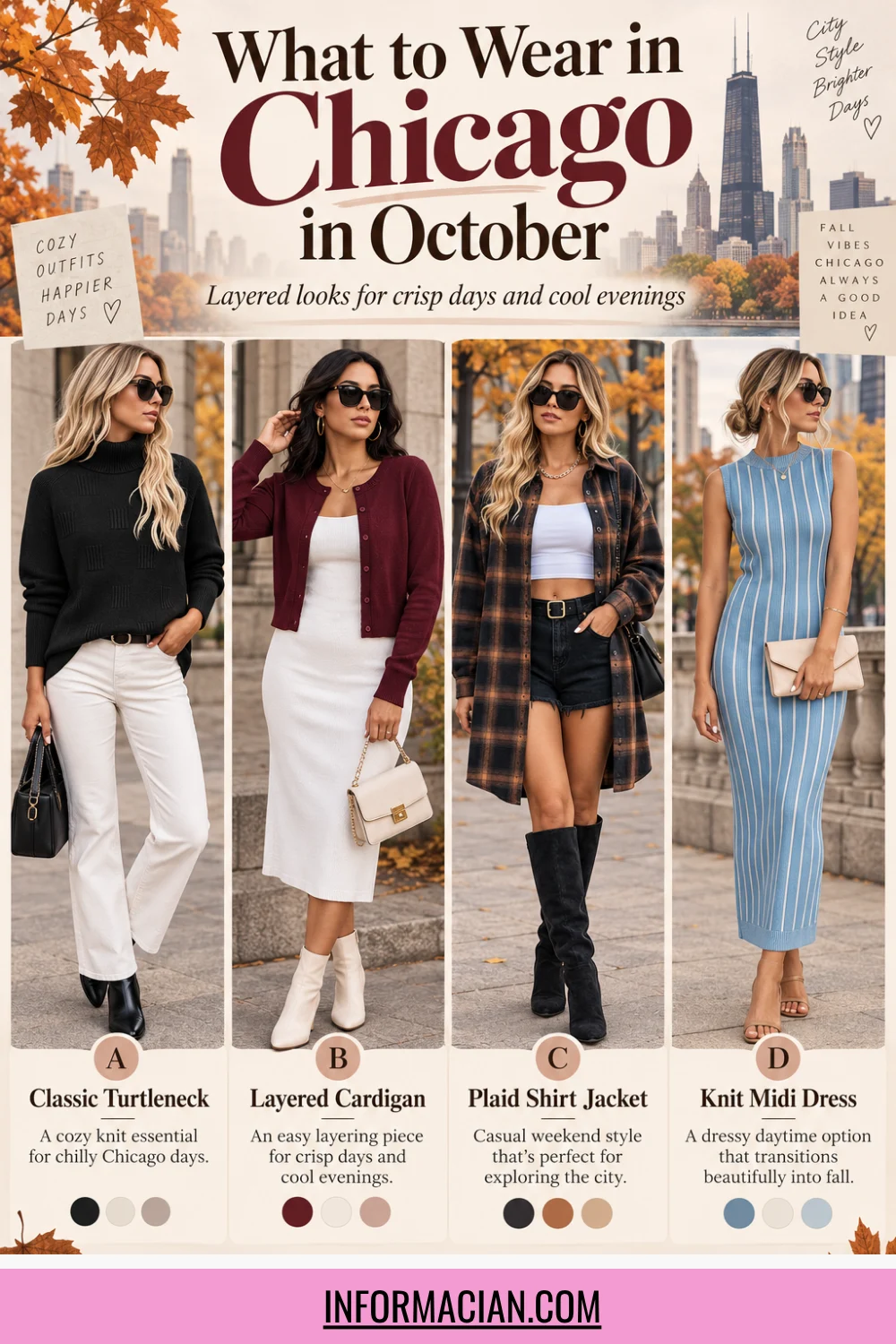
Chicago in October is the city at its most confusing — and I mean that as a compliment. One afternoon you’re walking the Riverwalk in a light sweater, sun bouncing off the skyscrapers, feeling like you’ve got this whole “fall in the Midwest” thing figured out. Two hours later the sun drops behind the buildings, the wind comes off the lake like it’s got somewhere to be, and you’re standing at a corner on Michigan Avenue wondering why nobody warned you.
I learned this the hard way on my first trip — packed like I was headed to a mild East Coast autumn, and spent half the trip either sweating on the train or freezing waiting for it. Chicago doesn’t really do “in-between” weather in October. It does layers, or it does regret.
So this isn’t a generic packing list. It’s what actually works when you’re walking twelve blocks a day, catching the El, ducking into a deep-dish spot, and still wanting to look like a person and not a marshmallow.
Before We Dive In
Weather: October in Chicago swings hard — highs can sit in the low-to-mid 60s°F (16-19°C) early in the month and drop into the high 40s°F (8-9°C) by Halloween, with mornings and evenings noticeably colder than midday.
Rain shows up in short, sharp bursts rather than all-day drizzle, so you need to be ready for it without carrying an umbrella around all day (more on that later — umbrellas and Chicago wind do not get along).
Walking conditions: This is a grid city, and a flat one, which sounds easy until you realize how long those grid blocks are and how exposed the sidewalks feel once you’re between two 40-story buildings acting like a wind tunnel.
You’ll walk more than you think, you’ll stand on train platforms more than you think, and your feet will know the difference between “cute shoes” and “shoes that work” by day two.
Style culture: Chicagoans dress well, but it’s a practical kind of well — think tailored coats over jeans, good boots, a scarf that’s doing actual work and not just decoration.
Nobody’s judging you for layering up, but showing up in shorts and flip-flops in mid-October will get you a few sideways glances, mostly out of secondhand cold.
The Bag You Bring Matters More Than You’d Think
Before we even get to clothes — think about what you’re packing them in. Chicago trips tend to mix museum days, lakefront walks, and nights out, so a soft-sided carry-on or a structured weekender duffle with a separate shoe compartment works better than a giant rolling suitcase you’ll be dragging over uneven sidewalks and into cramped hotel elevators near the Loop.

If you’re the type who overpacks “just in case,” a duffle with some flex in the sides is more forgiving than a hard-shell case, since October outfits tend to be bulkier (hello, sweaters and one good coat) and you’ll want room to bring back a Garrett’s popcorn tin or two without a packing crisis at the airport.
Local tip: Pack your coat in your bag on the way there, but plan on wearing it as a “personal item” on the flight home — it saves shocking amounts of suitcase space once you’ve picked up souvenirs.
Lightweight Layers (Why They Matter More Than You Think)
This is the single most important category on this whole list, and I mean that. Not the coat, not the shoes — the layers underneath them. Chicago in October isn’t cold enough to live in a parka all day, but it’s inconsistent enough that a single sweater will either be too much or not enough depending on the hour.
The system that actually works is: a breathable base layer (a fitted long-sleeve tee or a light merino top), a mid-layer you can tie around your bag when it warms up (a cardigan, a flannel, a lightweight quarter-zip), and then your outer layer on top of that.

The magic is in being able to peel off exactly one layer when you duck into an overheated deep-dish restaurant, instead of being stuck sweating through your only sweater.
I’d genuinely rather have three thin layers than one thick one. It’s lighter to pack, more flexible through the day, and honestly just gives you more outfit combinations without bringing more items.
Local tip: Merino or a merino-blend base layer is worth the splurge if you’re doing a lot of walking — it doesn’t hold onto sweat-smell the way cotton does, which matters when you’re re-wearing the same base layer two days in a row (we’ve all done it).
The One Jacket You Actually Need
You do not need five jackets. You need one genuinely good one, and it should be a midweight coat that can handle wind, a light rain, and a temperature drop into the 40s without you needing to layer a puffer underneath it.

A structured wool-blend trench or an unlined car coat hits the sweet spot for most of October — warm enough for evenings, not so warm you’re sweating at 2pm on a sunny day. If you’re visiting closer to Halloween, when temps are consistently lower, swap that for a lightly insulated parka or a quilted jacket instead, since the wind chill off Lake Michigan is no joke by then.
What I’d actively avoid is a jacket that’s only stylish and does nothing for wind — that thin denim jacket looks great in photos and does absolutely nothing once you’re standing on the Michigan Avenue bridge with the lake wind cutting through it.
Local tip: Anything with a hood is a small but real upgrade in Chicago — the rain here rarely lasts long enough to justify pulling out an umbrella, and a hood gets you through most of it.
Sweaters and Knits That Do Double Duty
A good chunky knit is basically a coat substitute on the milder days, and it’s the thing I reach for constantly on a Chicago trip. A crewneck or turtleneck in a mid-weight wool or wool-blend works over a base layer during the day and looks intentional enough to wear straight into dinner without changing.

I’d pack two or three of these max, in colors that mix and match with everything else — a cream, a rust or olive, and something neutral like charcoal covers you for the whole trip without repeating an outfit obviously. Turtlenecks specifically earn their keep here because they double as a scarf substitute on days when the wind is worse than expected.

Local tip: A slightly oversized knit over leggings or slim jeans is the easiest “put together without trying” outfit for a museum day at the Art Institute — comfortable enough for hours on your feet, put-together enough for the gift shop selfie.
Dresses That Still Make Sense for October in Chicago
You can absolutely wear dresses in Chicago in October — you just have to pick the right ones and be smart about tights and layering. Here’s what actually works:
A midi sweater dress in a ribbed knit is probably the single best dress option for this trip — warm enough on its own for a mild afternoon, and easy to layer a coat over for dinner.

A long-sleeve shirt dress in a heavier cotton or flannel works well for daytime sightseeing, especially paired with tall boots and tights underneath.
A wrap dress in a jersey or ponte knit fabric is forgiving after a big deep-dish pizza dinner and photographs beautifully against Chicago’s architecture.

A corduroy or denim shift dress brings texture without needing much thought, and layers easily under a coat for colder days.
A slip dress over a turtleneck is a genuinely underrated combo for evenings out — it reads as intentional styling rather than “I forgot it would be cold.”

And a fit-and-flare dress with tights and a cropped jacket is the move if you want something dressier for a nicer dinner reservation without checking a coat all night.
Local tip: Opaque tights aren’t optional if you’re wearing a dress after early October — 40-denier is the minimum, and 80-denier is more realistic once the wind picks up.
Jeans, Trousers, or That One Skirt
Denim is the default here for a reason — it holds up to a full day of walking, hides the fact you’ve worn it twice, and layers well under a coat. A mid-wash straight or slightly wide-leg jean is more versatile than skinny jeans for this trip, since it works with both sneakers and boots.

If jeans aren’t your thing, a wool-blend trouser in a straight or tapered cut is a great alternative — it reads a little more polished for dinners and doesn’t wrinkle the way cotton chinos do after a day balled up in your bag.

A pleated midi skirt with tights is a good third option if you want something between jeans and a dress — just make sure the fabric has some weight to it (wool, corduroy, ponte), because a thin cotton skirt will do nothing against the wind on an exposed corner.

Local tip: Skip shorts entirely after the first week of October, even on a warm-looking day — the temperature swing between noon and evening will catch you off guard.
Walking Shoes That Won’t Wreck Your Feet on Michigan Ave
This is not the trip for breaking in new shoes. Chicago’s grid means more walking than most people expect, plus standing on train platforms, plus cobblestone-adjacent stretches near the river — your feet need shoes that are already broken in and actually weatherproof.
A pair of leather or suede ankle boots with a low block heel or flat sole is the best all-around choice — dressy enough for dinner, sturdy enough for a full sightseeing day, and they handle a light rain shower without falling apart.

If boots aren’t your style, a clean leather sneaker in a neutral color does almost as much work and looks intentional rather than “athletic.”

I’d avoid anything with a completely flat, thin sole (looking at you, ballet flats) — Chicago sidewalks are fine, but a full day on them with zero cushioning will end your evening early.
Local tip: Waterproof spray on suede or leather boots before you leave home — it takes two minutes and saves your only good pair of shoes during an unexpected downpour near Millennium Park.
What NOT to Wear (Tourist Mistakes I’ve Actually Seen)
Let’s just get this out of the way plainly. Shorts and a t-shirt past the first week of October is the number one mistake — it looks fine at noon and miserable by 6pm. Flip-flops or slides are the second — not because of “style,” but because your feet will genuinely hurt after a day on concrete with zero support.
A single heavy coat with nothing underneath it is another one — you’ll overheat the second you step into a warm restaurant or the El, then have nothing left to layer once you’re back outside.
And a thin umbrella that flips inside out the second the lake wind picks up is less “mistake” and more “inevitability” — just plan around it instead.
Local tip: If you only remember one thing from this whole article, let it be this: bring a hooded jacket over an umbrella. You’ll use it more and regret it less.
Evening Outfits: Dinner, Rooftop Bars, and Theatre Nights
Chicago’s evening dress code is more relaxed than New York’s but a step up from totally casual — think “put together” rather than “black tie.” For dinner or a rooftop bar, a sweater dress or the slip-over-turtleneck combo mentioned earlier works well, paired with your ankle boots and a statement earring or two to elevate it.
If you’re doing a proper night out — theatre district, a nicer restaurant reservation — trousers with a silky top and a blazer or tailored coat over it reads polished without being overdressed.

Rooftop bars specifically get cold fast once the sun goes down, even if the afternoon was mild, so bring the coat even if you don’t think you’ll need it walking there.

Local tip: Coat check exists at most nicer restaurants and theatres downtown, so don’t be afraid to bring a slightly dressier coat for the evening rather than lugging your daytime parka into dinner.
What to Wear for Museums, Churches, and Indoor Attractions
Chicago’s big cultural stops — the Art Institute, the Field Museum, various historic churches around the Loop — don’t have strict dress codes, but a little modesty goes a long way if you’re planning to step into any of the older churches or cathedrals, several of which are genuinely beautiful and worth the detour.
Covered shoulders and knees are a safe default for church visits, which most of your October layering (sweaters, midi dresses, tights) already covers without extra thought. Museums are more about comfort than modesty — you’ll be on your feet for hours, so this is where those broken-in boots really earn their place.
Local tip: The Art Institute and several museums run noticeably warm indoors compared to the street — this is exactly where those peelable layers save you from carrying a hot coat around for two hours.
Bags: Crossbody vs. Backpack
For a city built around walking and public transit, a crossbody bag is the more practical choice for daytime — it keeps your hands free, sits close to your body on a crowded train, and doesn’t scream “tourist” the way a big backpack sometimes does.

A mid-sized crossbody with a zip closure covers wallet, phone, a folded scarf, and a small umbrella without bulking up your outfit.
A backpack still has its place if you’re planning a heavier museum day with a water bottle, a camera, and layers you’ve peeled off — just go for a slim, structured one rather than a bulky hiking-style pack, which looks out of place with anything other than the most casual outfits.
Local tip: Whichever bag you choose, make sure it has a spot for a phone you can reach without fully opening it — you’ll want quick access for photos of the skyline from the Riverwalk.
Accessories That Do More Than Decorate
In Chicago in October, your accessories aren’t just finishing touches — they’re doing actual functional work. A substantial scarf (not a thin decorative one) is the single most useful accessory you can pack, since it works as neck coverage against the wind and can be tied over your head in a pinch if the rain starts.

A structured hat — a wool beanie or a soft brimmed hat, not a baseball cap — adds warmth and a little polish at the same time.
Gloves are worth packing by mid-to-late October specifically for the lakefront and the bridges, where the wind hits hardest.

And one statement piece — a bold earring, a good watch, a leather belt — keeps your layered outfits from reading as “just trying to stay warm” and more as “dressed on purpose.”
Local tip: A crossbody bag strap and a scarf in coordinating tones is a five-second way to make a thrown-together layered outfit look like you planned it.
Rain Prep (The Unexpectedly Important Category)
Chicago rain in October tends to arrive fast and leave fast, which means the standard advice — “just bring an umbrella” — genuinely doesn’t work as well here as it does elsewhere.
The wind coming off Lake Michigan will turn a cheap umbrella inside out within minutes, and even a good one is awkward to manage while also holding a coffee and trying to find your train platform.
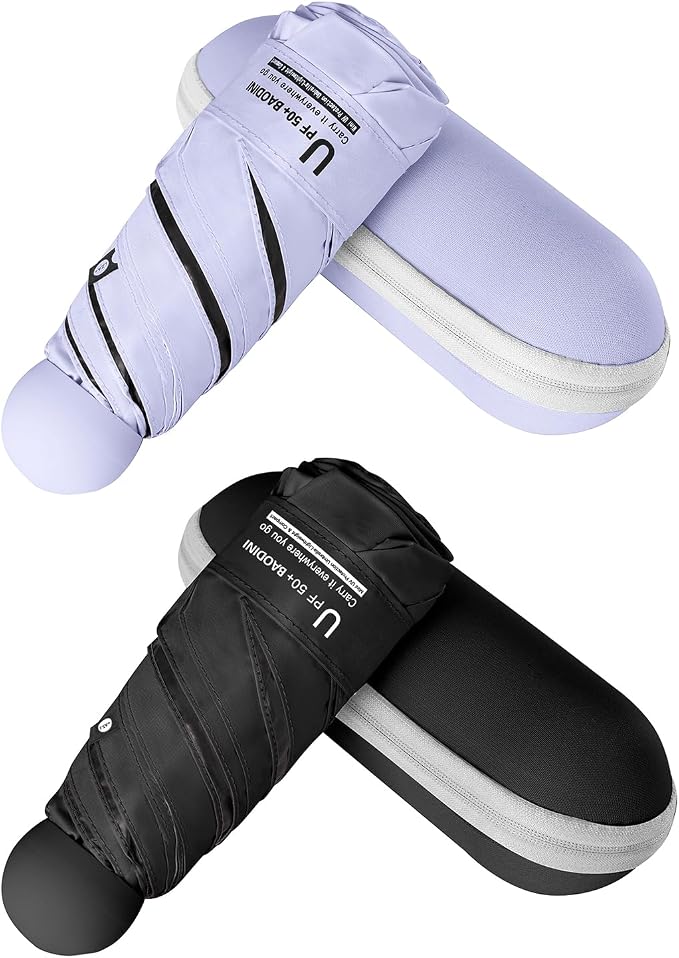
A hooded, water-resistant jacket solves this more reliably than an umbrella does. If you do want to bring one as backup, get a genuinely sturdy compact travel umbrella rather than the flimsy ones — but treat it as backup, not your primary rain plan.
Local tip: Water-resistant (not just “water repellent”) boots are worth the investment if you’re visiting later in October — puddles collect fast at curb corners downtown after a burst of rain.
Fabrics to Choose (and Avoid)
Wool, wool-blends, corduroy, and heavier cottons are your friends this month — they hold warmth without excess bulk and shrug off a light drizzle better than you’d expect. Merino wool specifically is worth prioritizing for base layers since it regulates temperature well across the day’s swings.
What to avoid: pure linen (too breezy and wrinkles instantly), thin rayon or viscose that clings and offers zero warmth, and anything dry-clean-only that you’re nervous about getting rained on — Chicago in October is not the trip for delicate fabrics you’re babying all day.
Local tip: A ponte knit is the unsung hero fabric for this trip — it holds its shape, doesn’t wrinkle in a suitcase, and works for both dresses and trousers.
Building a Capsule Wardrobe for 4–5 Days
You genuinely don’t need a different outfit for every single day. A tight capsule built around one coat, two pairs of bottoms (one jean, one trouser or skirt), three tops or sweaters, one dress, and one pair of boots gives you more combinations than you’d think — easily 6–8 distinct outfits from about 8 pieces total.
Pick a color story before you pack — neutrals plus one or two accent colors — so everything mixes with everything else without you having to think about it each morning.
This is also what makes the accessories section above so useful: swapping a scarf or a piece of jewelry changes an outfit’s whole feel without adding suitcase weight.
Local tip: Lay everything out on your bed before you pack and count actual outfit combinations, not items — if you can’t build at least six full outfits from what’s on the bed, you’re either overpacking or missing a piece.
The Practical Packing Section
For a 4–5 day trip, aim for roughly: one coat, two sweaters or knits, two base layers, one dress, two bottoms, one pair of boots plus a backup shoe, a scarf, a hat, and enough underlayers to rotate without doing laundry mid-trip.
That’s it. It sounds like a lot listed out, but it’s genuinely one carry-on’s worth of clothing if you’re layering smartly.
The biggest overpacking mistake is bringing multiple “just in case” jackets instead of trusting the layering system to handle temperature swings. The second biggest is packing shoes you haven’t actually walked in for at least a few hours before the trip — blisters on day one will color your whole impression of the city, which isn’t fair to Chicago.
Plan your outfits loosely by day before you pack, accounting for one dressier evening and the rest casual-but-put-together, and you’ll pack lighter and dress better than if you just throw things in a bag and hope.
Before You Go
Chicago in October rewards people who dress like they actually live there for a few days — layered, a little intentional, ready for the wind without being buried under it. You don’t need a suitcase full of options.
You need the right handful of pieces that work together, a coat that actually does its job, and boots that have already been broken in.
Pack smart, layer smarter, and you’ll spend your trip actually looking at the skyline instead of thinking about how cold your ankles are. Chicago’s worth showing up for properly — go have the trip.

