
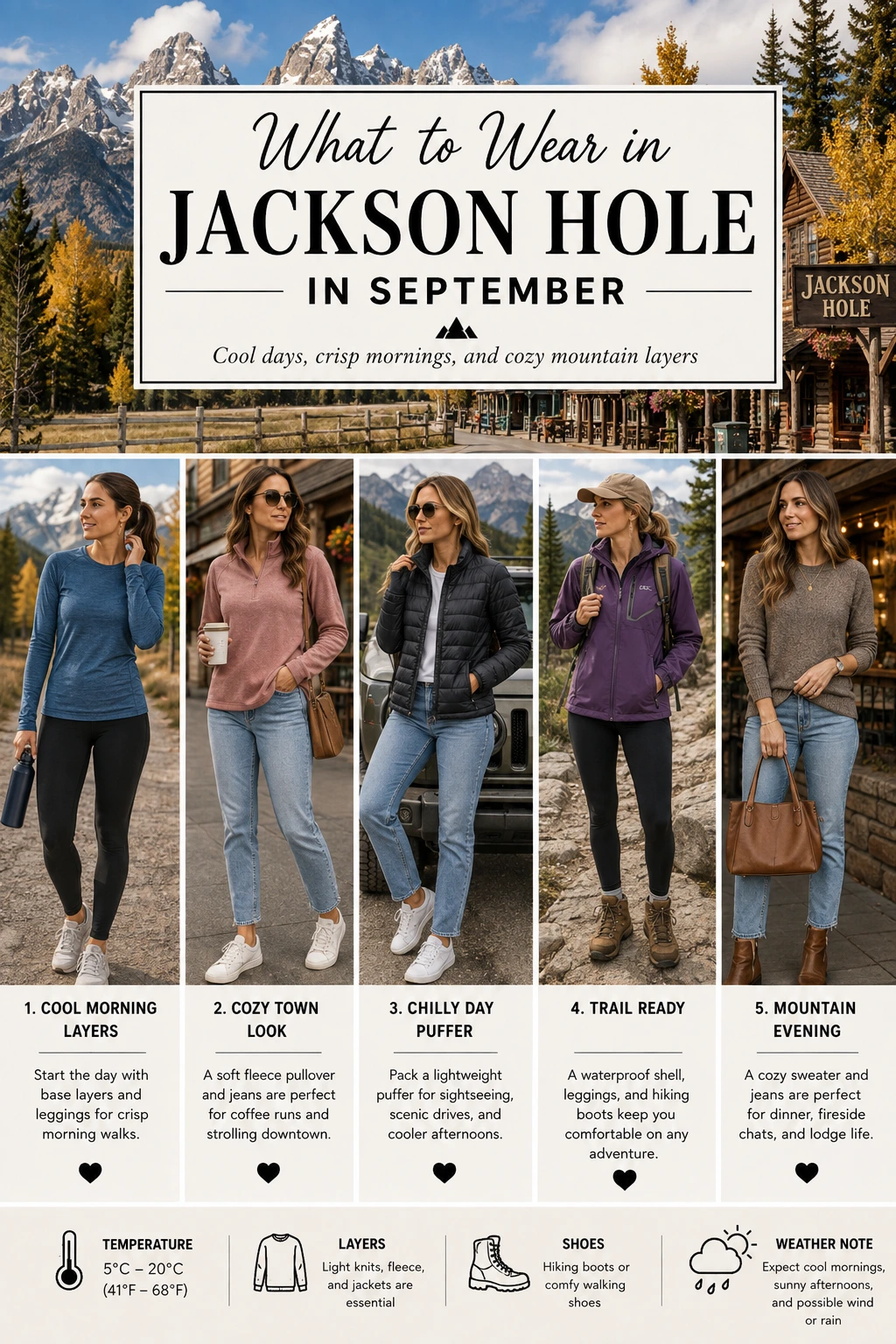
September in Jackson Hole is the month that confuses even seasoned mountain travellers, because a single day can move through three seasons before dinner. Sunrise might arrive with frost on the truck windshields, the afternoon might feel like a warm, dry June day on the valley floor, and by the time the sun drops behind the Tetons, the temperature can fall fast enough to make you regret leaving the puffer jacket at the hotel.
This is not a place where one outfit formula works for an entire day, and that’s the real packing problem. Visitors arrive expecting either full autumn chill or lingering summer warmth, and Jackson Hole in September delivers a strange, beautiful mix of both, often within the same afternoon.
The landscape adds its own demands. Wide gravel paths through Grand Teton National Park, wooden boardwalks in downtown Jackson, and uneven trailheads near Jenny Lake all call for footwear that can handle dust, gravel, and the occasional muddy patch left by an early snow flurry.
Add in elevation — Jackson sits around 6,200 feet, with plenty of nearby trails and overlooks pushing higher — and the sun feels sharper than the air temperature suggests, even as the breeze carries a real bite.
The goal for this trip is not a large suitcase full of options, but a small, adaptable set of layers that move easily from a chilly morning wildlife drive to a sun-warmed lunch on the town square to a properly cold evening watching the light fade over the mountains.
What the Weather Actually Feels Like in Jackson Hole in September
Weather : Morning temperatures in Jackson Hole in September commonly sit in the mid-30s to low 40s Fahrenheit, especially near the rivers and in the shadow of the mountains. Frost on car windows in early September is not unusual, and by late September it becomes fairly common.
By midday, temperatures often climb into the 60s, and on clear, sunny days they can push into the low 70s. This swing of 30 degrees or more between dawn and afternoon is the defining feature of the month, and it is the main reason a single jacket or single outfit never quite works for the whole day.
Evenings cool quickly once the sun dips behind the peaks, often dropping back into the 40s by dusk and into the 30s after dark. Wind is a real factor here too, particularly in open areas like the National Elk Refuge or along Highway 191, where a breeze can make an already cool morning feel noticeably colder.
Rain in September tends to arrive as short, scattered showers rather than long soaking storms, though early season snow at higher elevations is entirely possible, particularly in the back half of the month. Humidity stays low throughout, which helps sun exposure feel deceptively mild even when the UV index is high. Sidewalks in downtown Jackson are flat and easy, but most sightseeing here happens on trails, overlooks, and gravel pullouts, so comfortable, broken-in footwear matters more than in a typical city trip.
Style culture: Dress norms in Jackson Hole lean casual and outdoorsy almost everywhere. Even nicer restaurants on the town square rarely require more than clean, put-together casualwear, and hiking boots at breakfast are a completely normal sight.
The Layering System That Actually Works Here
The smartest way to think about dressing for Jackson Hole in September is not in terms of “outfits” but in terms of layers that can be added or removed as the temperature shifts through the day. A base layer, a warm mid-layer, and a wind- or water-resistant outer layer will carry a traveller through nearly every hour of daylight.

Mornings call for the full stack: a long-sleeve base layer, a fleece or insulated mid-layer, and a windproof shell on top, paired with jeans or lined trousers.

By midday, the shell and sometimes the mid-layer come off, leaving a simple top and jeans comfortable enough for walking around town or a moderate trail.

Evenings reverse the process, and this is where many travellers get caught out — assuming that because the afternoon was warm, the night will be too.
One outfit combination that works well for a day like this— is a merino long-sleeve top under a flannel shirt with jeans and hiking shoes in the morning, trimmed down to just the flannel and jeans by early afternoon, then topped again with a packable puffer once the sun starts dropping.
This layering approach also solves the packing problem, since it means fewer total garments are needed. Three or four versatile layers, mixed and matched, cover far more temperature range than a suitcase of single-purpose outfits.
Base Layers and Breathable Tops
Cotton alone struggles in this climate, since it holds onto morning dampness and does little to regulate temperature as the day warms and cools. A practical compromise is packing a mix of merino wool and technical synthetic tops that manage both cold starts and warmer middays.
A long-sleeve merino wool top works as the foundation for cold mornings and layers invisibly under a flannel or fleece without adding bulk, while still feeling comfortable if temperatures climb and the outer layer comes off.

Short-sleeve tops earn their place for warm afternoons, particularly on days with a scenic drive through the valley or a relaxed lunch outdoors on the town square.

A soft cotton-blend tee or a lightweight flannel with sleeves pushed up handles the midday warmth without needing a full wardrobe change.

Mid-Layers: Fleece, Flannel, and Light Sweaters
The mid-layer is arguably the most-used piece of the entire trip, since it bridges the gap between a chilly morning base layer and a warm afternoon top. Flannel shirts are almost a uniform in this part of Wyoming, not because of any dress expectation, but because they are genuinely practical — warm enough for a 40-degree morning, breathable enough to tie around the waist by 1pm.
A midweight fleece pullover offers real warmth without the bulk of a puffer, making it ideal for cool mornings at Jenny Lake or an early wildlife-viewing drive through the National Elk Refuge area.

A button-front flannel shirt, worn open over a tee or buttoned as its own layer, flexes easily between casual sightseeing and a relaxed dinner out. One outfit that covers a full day nicely is a merino tee, flannel shirt, and jeans in the morning, with the flannel simply left open once temperatures rise past the mid-50s.
Outer Layers for Wind, Cold, and the Occasional Shower
Jackson Hole’s outer layer needs to do three jobs at once: block wind, handle a light rain shower, and pack down small enough to stuff in a daypack once the afternoon warms up. A single heavy winter coat is rarely the right answer in September, since it overheats the wearer by midday and takes up too much suitcase space for the warmth it provides only in the early morning and evening.
A packable down or synthetic puffer jacket compresses small enough to carry all day and provides the real warmth needed once the sun drops behind the mountains in the evening.

A waterproof, windproof shell jacket handles the scattered afternoon showers and the near-constant breeze along open roads and overlooks, without trapping heat the way a heavier coat would.

For travellers debating between the two, the practical answer is usually both — the shell for wind and rain, the puffer for genuine cold, worn together on the coldest mornings and separately the rest of the day. This two-piece approach is lighter to pack than one heavy coat and considerably more flexible across a 30-degree daily swing.
Jeans, Trousers, and Layering-Friendly Bottoms
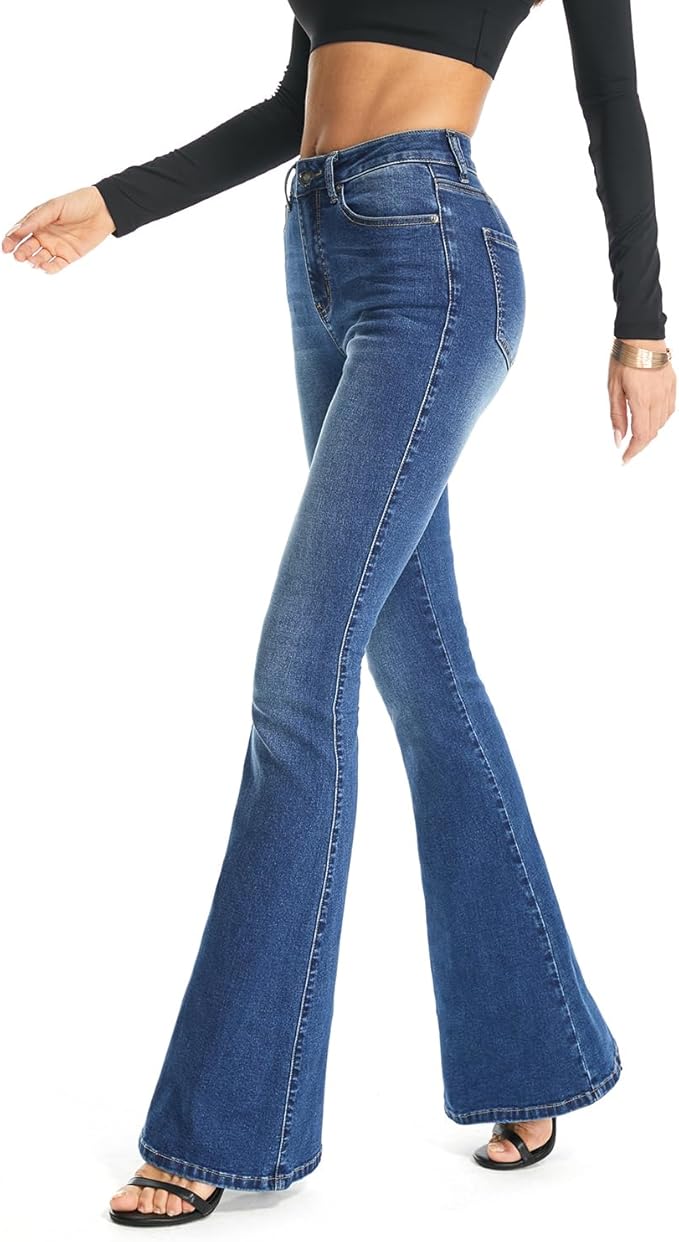
Jeans remain the most practical bottom for this trip, since they handle dust, gravel, and casual dinners equally well without looking out of place anywhere in town. A slightly relaxed or straight fit allows room for thermal leggings underneath on the coldest mornings, which matters more here than most travellers expect.
A pair of fleece-lined leggings works as a base layer under jeans on frosty mornings, then can be worn alone under a dress or skirt on a milder afternoon back in town.

Soft, stretch-friendly hiking trousers are worth the suitcase space if a longer trail day is planned, since they move more easily than denim and dry faster if caught in a brief shower.

Skirts and dresses are entirely wearable in Jackson Hole in September, particularly in town, but they work best paired with tights and a warm layer rather than on their own.

Footwear for Gravel, Boardwalks, and Trails
Footwear is where a lot of first-time visitors underpack, bringing city sneakers that struggle on gravel pullouts, boardwalk steps, and the uneven dirt paths common around most viewpoints in Grand Teton National Park.
A pair of waterproof hiking boots handles everything from a muddy trailhead after overnight rain to a dusty gravel overlook, and provides the ankle support needed on uneven terrain that flat sneakers simply don’t offer.

For lighter days spent mostly in town, a sturdy pair of trail-style sneakers can substitute for full boots, provided they’ve already been broken in before the trip.

Wet grass and morning dew are common enough around lodges and campgrounds that fully waterproof soles are worth prioritising over stylish but untested new shoes. This is where many travellers overpack — bringing three or four shoe styles when one solid boot and one casual shoe cover nearly every scenario.
Evening Outfits and Warm-Weather Restaurant Dressing
Evenings in Jackson drop fast, and a warm afternoon outfit is rarely enough once dinner plans start. The good news is that dress codes stay relaxed almost everywhere, so “elevated casual” is the ceiling rather than anything formal.

A soft knit sweater works well over a simple top for dinner on the square, offering enough warmth for the walk over without needing a full jacket if the restaurant itself is warm inside.

Jeans or dark trousers paired with ankle boots and that sweater make a dependable evening outfit that also photographs nicely against the mountain backdrop many restaurants offer through their windows. A packable puffer draped over the shoulders or worn zipped for the walk back to the car or hotel finishes the look without requiring a second outfit change.
Sun Protection at Elevation
The thin, dry air at 6,200 feet lets more UV through than most visitors expect, especially on clear September afternoons when the temperature itself doesn’t feel dangerously hot.
A wide-brim sun hat protects the face and neck during long stretches outdoors, whether that’s a wildlife-watching stop along the highway or a picnic near String Lake, and works just as well over a low ponytail as loose hair.

Polarised sunglasses cut glare off both the open sky and any lingering water on the roads or lakes, making driving and hiking noticeably more comfortable during the brightest midday hours.

Sunscreen deserves a spot in every daypack regardless of cloud cover, since altitude sun burns faster than the mild air temperature suggests. A lightweight, high-SPF option that doesn’t feel greasy under a hat brim tends to get reapplied more consistently than a heavier formula.

Accessories That Solve Real Problems
A few small accessories do a disproportionate amount of work on a trip built around big temperature swings. Rather than adding bulk, they simply make the layering system function better.
A merino wool beanie takes up almost no suitcase space but makes a real difference on frosty mornings, particularly for early sunrise drives when the shell jacket alone isn’t quite enough.

A lightweight scarf or neck gaiter handles the wind along open roads and can double as an extra layer if the evening turns colder than expected. Thin gloves are worth packing for late-September trips or early morning wildlife drives, since fingers get cold well before the rest of the body notices the temperature drop.

Bags for Trails, Towns, and Long Driving Days
Most Jackson Hole itineraries mix short walks, longer hikes, and long stretches in a rental car, which makes bag choice more about function than style.

A compact daypack carries the extra layer, water, sunscreen, and camera needed for a few hours at a trailhead or scenic overlook, and sits comfortably even when half-full for a shorter outing.

For evenings in town, a small crossbody bag keeps hands free for the uneven boardwalks and gravel parking areas around the town square, without the bulk of a full daypack. Anti-theft features matter less here than in a major city, though a bag that closes securely still helps on windy overlooks where an open tote can spill its contents.

Fabrics Worth Prioritising
Merino wool, technical fleece, and synthetic blends outperform cotton across nearly every category in this climate, mainly because they handle both the cold mornings and the temperature swing into afternoon warmth without holding onto dampness. Cotton isn’t banned from the suitcase, but it works best as a single midday layer rather than a base layer relied on all day.
Waterproof or water-resistant treatments on outer layers matter more than pure insulation, since Jackson Hole’s September weather leans toward brief showers and wind rather than sustained rain. A softshell or treated nylon shell handles this far better than a heavy cotton canvas jacket, which soaks through and stays wet for hours.
Common Clothing Mistakes to Avoid
The most common mistake is packing for only one temperature — either a full autumn wardrobe of heavy sweaters and coats, or a warm-weather bag of shorts and tanks, when the truth sits somewhere in between and shifts throughout the day. A close second is bringing unbroken-in hiking boots, which cause blisters exactly when comfort matters most, on a long trail day or extended wildlife drive.
Leaving the puffer jacket in the hotel room because the afternoon felt warm is another frequent misstep, since evening temperatures fall fast and unpredictably once the sun clears the ridgeline. Similarly, packing only cotton tees as a base layer often backfires, since they stay damp and cold on frosty mornings rather than wicking moisture the way merino or synthetic fabrics do.
Heeled shoes, delicate sandals, and anything without real tread should generally stay home, since even a short walk to a scenic overlook often means gravel, dirt, or uneven wooden boardwalks rather than flat pavement.
Building a Simple Capsule Wardrobe
A workable capsule for this trip centers on layers that mix freely rather than fixed outfits.
- Two or three tops, one flannel, one fleece, one packable puffer, one waterproof shell, two pairs of jeans or trousers, and a single pair of waterproof boots cover the vast majority of a week’s activities.
- Add one warmer sweater and one slightly dressier top for evenings, plus the sun hat, sunglasses, and beanie already discussed, and the capsule handles nearly every temperature and setting this trip presents.
The value of this approach isn’t minimalism for its own sake — it’s that every piece has a clear, repeated job across multiple days, which cuts down on both suitcase weight and decision fatigue each morning.
Packing List for a One-Week Trip
For a realistic example of a seven-day Jackson Hole trip in September, five tops (a mix of merino base layers and breathable tees), two flannel shirts, one fleece, one packable puffer, one waterproof shell, three bottoms (two jeans, one pair of hiking or fleece-lined leggings), and one warmer sweater for evenings covers the range of temperatures comfortably.
Footwear stays simple: one pair of waterproof hiking boots and one pair of casual shoes for town evenings. Round out the list with the beanie, sun hat, sunglasses, a scarf or neck gaiter, and thin gloves if travelling in the back half of the month. This list intentionally repeats pieces across multiple days, since a flannel worn twice with a different base layer underneath looks and feels like a different outfit entirely.
Repeating Outfits Without It Feeling Repetitive
Outfit repetition works especially well in a place like Jackson Hole, where the setting itself changes daily even when the clothing doesn’t. Swapping which top goes under the same flannel, or changing which shoes pair with the same jeans, creates enough visual variety that repeated pieces rarely stand out.
A useful method is planning outfits by layer rather than by full look — deciding each morning which base layer, mid-layer, and outer layer the day’s temperature and activities call for, rather than mentally “using up” a fresh outfit daily. This also solves laundry logistics, since base layers can be rewashed or worn twice while outer layers like the fleece or shell rarely need washing at all during a week-long trip.
What to Wear on Travel Days
Travel days into Jackson Hole, whether flying directly into Jackson Hole Airport or driving in from Salt Lake City or Idaho Falls, call for the same layering logic used on-site. A base layer, a flannel or light sweater, and a packable jacket handle the temperature swing between an air-conditioned airport, a warm car, and the cool mountain air on arrival.
Comfortable shoes matter here too, since travel days often include walking through terminals, standing at rental car counters, or an unexpected stop along the highway to photograph the Tetons. Jeans or joggers paired with slip-on shoes make security lines and long drives easier without sacrificing the ability to layer up once outside.
Packing Light Versus Overpacking
The temptation on a trip with such a wide temperature range is to overpack “just in case,” bringing three jackets, four pairs of shoes, and outfits for weather that may only appear on one afternoon. The better approach is trusting the layering system already outlined, since three well-chosen layers create more outfit combinations than eight single-purpose pieces ever could.
A small packing trick is laying out the full capsule before the suitcase closes and mentally walking through a typical day — morning drive, midday walk, evening dinner — checking that each piece has a clear role. If an item doesn’t fit into that day, it’s usually safe to leave behind.
For travellers coming from noticeably different climates, similar seasonal logic applies elsewhere too; a guide on what to wear in Toronto in September covers a comparable early-autumn layering approach for a very different, more urban setting, while what to wear in Washington DC in September tackles a warmer, more humid version of the same seasonal transition.
Adapting the List for Warmer or Cooler Stretches
Early September trips typically skew slightly warmer and drier, meaning the puffer jacket sees less use and lighter layers like a long-sleeve tee and light flannel handle more of the workload. Late September trips, particularly after the 20th, often bring the first real cold snaps and even early snow at higher elevations, which justifies packing the beanie, gloves, and heavier fleece with more confidence.
Travellers extending their trip toward Yellowstone should expect slightly cooler, windier conditions at higher elevations, where the same layering system applies but gets used more aggressively and more often throughout the day.
A Few Things Worth Leaving at Home
Heavy full-length winter coats rarely earn their suitcase space in September, since they overheat the wearer during warm afternoons and duplicate the job already done by a puffer-and-shell combination. Dressy heels, delicate sandals, and anything without real tread struggle on the gravel, dirt, and boardwalk terrain that defines most sightseeing here.
Multiple “just in case” outfits for weather extremes that may never appear also tend to sit unused in the suitcase, taking up space better spent on an extra base layer or a second pair of comfortable socks. For travellers comparing very different climates on the same trip, resources like what to wear in Miami in September or what to wear in Dallas Texas in September make the contrast clear — what works in Wyoming’s mountains would be entirely wrong for a humid southern city, and the reverse is equally true.
Jackson Hole in September rewards travellers who pack for change rather than for a single expected temperature. A well-chosen set of layers, a genuinely waterproof boot, and one reliable warm jacket will carry a traveller comfortably from a frosty sunrise wildlife drive to a warm midday walk through town to a cold, clear evening under the Tetons. The suitcase that works best here isn’t the fullest one — it’s the one built around pieces that can be added, removed, and recombined as the mountain air changes its mind, sometimes more than once before lunch.


One Response