
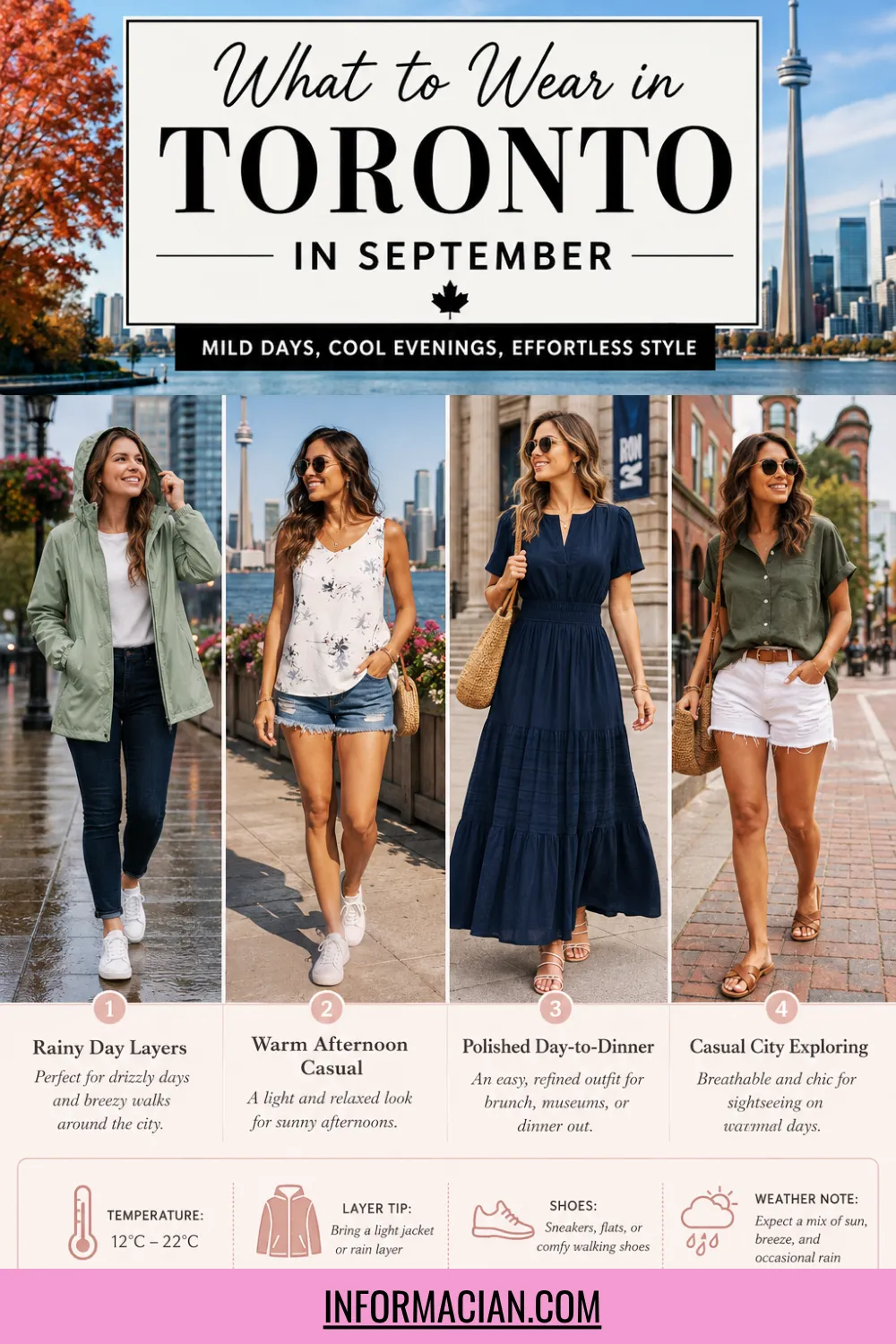
September in Toronto is one of those months that refuses to commit to a single season, and that indecision is exactly what makes packing for it so tricky.
Mornings can feel like the tail end of summer, with a soft haze over Lake Ontario, while evenings drop cool enough to make you grateful for a jacket you almost left at home.
The city moves fast on foot and faster underground, so comfort has to matter as much as style, especially if your itinerary includes the Distillery District, the Financial District, and a streetcar ride or two.
Many visitors assume they can pack like it is still August, then find themselves cold on a patio at 9 p.m. or overheated on a midday walk through Kensington Market.
The real skill in dressing for Toronto in September is building outfits that can shift with the day rather than trying to predict one fixed temperature.
What the Weather Actually Feels Like in Toronto in September
Weather :Toronto in September sits in that transitional zone between summer humidity and the first real hints of autumn. Early in the month, afternoon highs often reach the low-to-mid 20s Celsius (roughly mid-70s Fahrenheit), and the air can still feel sticky, especially near the waterfront. By the final week, mornings and evenings frequently dip into the low teens Celsius, and a light frost is not unheard of on an unusually cool night.
The daily swing is the part that catches people off guard. A 9 a.m. walk to a coffee shop might feel mild and breezy, while midday sun on an open street like Queen West can feel surprisingly warm. Then, by the time dinner plans roll around, the temperature has usually dropped enough that bare arms feel like a mistake. This is not a city where you dress once for the day and forget about it.
Rain is a real possibility throughout September, though it tends to arrive in short, sometimes heavy bursts rather than long, grey days. Humidity lingers early in the month, then eases as the weeks progress, which is why many travellers find breathable fabrics more comfortable than heavier synthetic blends, even on cooler days.
Walking and standing conditions: Toronto is also a walking-and-transit city. Sidewalks are generally well maintained, but distances between attractions, especially downtown, add up quickly, and the subway and streetcar system involves stairs, platforms, and occasional waits in open-air stations. Comfortable footwear is not a suggestion here so much as a practical requirement.
Style culture: Dress norms across the city lean casual-smart. Toronto is a fairly relaxed, style-conscious place where jeans and a good top are appropriate almost everywhere, though some restaurants and rooftop bars lean slightly dressier in the evening. Neighbourhoods vary: Yorkville tends to feel more polished, while areas like Ossington or Kensington Market are more laid-back and eclectic.
The Layering Formula That Actually Works Here
The single most useful packing principle for Toronto in September is building outfits in layers that can be added or removed without requiring a full outfit change. Because the temperature swing between morning and evening can be ten degrees Celsius or more, a single heavy layer is far less useful than two or three lighter ones.

A practical formula many travellers rely on is a breathable base layer, a light mid-layer such as a cardigan or overshirt, and a compact outer layer for wind or a sudden cool snap.

This means a sleeveless top or short-sleeve tee can work at midday, while the cardigan comes out for a shaded walk through a park, and a light jacket handles the evening chill near the water.
One detail worth knowing is that Toronto’s wind, particularly close to the harbourfront or on higher floors of the PATH-connected downtown core, can make the air feel several degrees cooler than the forecast suggests. A jacket that blocks wind, even a thin one, often does more for comfort than an extra sweater.
This layering approach also solves the day-to-night problem elegantly: the same trousers or skirt can move from a museum visit to a dinner reservation simply by swapping a casual top for a slightly dressier one and adding a blazer or structured jacket.
Breathable Tops for Warm Afternoons
On warmer September days, especially in the first half of the month, breathable tops matter more than most travellers expect. Cotton, linen blends, and lightweight modal fabrics handle both the residual summer humidity and the walking-heavy itinerary better than thicker jersey or synthetic blends that trap heat.

A short-sleeve blouse in a breathable fabric pairs easily with jeans for a morning at the St. Lawrence Market, then works just as well tucked into trousers for a dinner reservation later. Sleeveless tops are also useful, provided a cardigan or shawl is nearby for when the temperature drops.

The practical compromise for pattern and colour is to lean toward pieces that mix well with the two or three bottoms you are packing, since outfit repetition is inevitable on any trip longer than a few days.

Neutral tones with one or two accent colours tend to photograph well against Toronto’s mix of glass towers, red-brick Victorian streets, and green park spaces.
Jeans, Trousers, and Skirts That Handle a Full Day of Walking
Given how much walking a typical Toronto day involves, from the Distillery District’s cobblestone lanes to the long stretch of the waterfront trail, bottoms need to prioritise comfort as much as style. Mid-weight jeans are a reliable choice for most of September, especially as temperatures cool later in the month.

Tailored trousers in a breathable fabric offer a slightly dressier alternative for museum visits or dinner without sacrificing comfort, and they layer well with tights underneath if a cooler evening catches you off guard.

A midi skirt, ideally in a fabric with a little structure rather than one that clings in humidity, works nicely for warmer days and pairs easily with both flats and ankle boots.

Shorts are still reasonable for the first week or two of September, particularly on a hot afternoon at the Toronto Islands, but many visitors find they get less use than expected once the month progresses and evenings turn cooler.

Dresses That Transition From Day to Evening
A single well-chosen dress can simplify packing considerably, and Toronto’s casual-smart dress code makes this easier than in more formal cities. A shirt dress in a breathable fabric works well for daytime sightseeing, especially paired with white sneakers and a crossbody bag.

For evenings, a slightly more fitted midi dress in a slightly heavier fabric, worn with a blazer or leather jacket, moves comfortably from a restaurant in King West to a rooftop bar without feeling out of place.

The key is choosing a dress that does not rely entirely on bare arms or legs, since the evening temperature drop makes that combination uncomfortable more often than not.

One useful outfit formula: a wrap dress, ankle boots, and a cropped jacket. This combination handles a cool evening breeze off the lake while still feeling put-together for dinner or a theatre outing.
Cardigans, Overshirts, and Light Jackets
This is arguably the most important clothing category for the entire trip.
A mid-weight cardigan is useful almost every day, whether thrown over a sundress in the late afternoon or layered under a jacket once the sun sets. Overshirts, particularly in a slightly heavier cotton or flannel blend, work well for cooler mornings and can be tied around the waist once the day warms up.
A light jacket, ideally one that resists wind and light rain, is worth prioritising over a heavier coat, which is rarely needed in September except on an unusually cool night. Trench coats in a lightweight fabric are a popular choice among visitors precisely because they handle both drizzle and evening chill without adding bulk.

For evenings that call for something a bit more polished, a tailored blazer works well over a simple top and trousers, offering structure without the weight of a full jacket.

Rain-Ready Choices Without Overpacking
September rain in Toronto tends to be sudden rather than prolonged, so a compact, packable rain jacket is usually more practical than a full-size umbrella, which can be awkward on crowded streetcars or windy corners.

A lightweight rain jacket also does double duty as a wind layer on clear but breezy days.

Footwear matters here too. Sneakers or ankle boots in a water-resistant material handle sudden downpours far better than canvas shoes, which can stay damp for the rest of the day.

A small packing trick is to bring a pair of thin, quick-drying socks specifically for rainy days, since wet feet are one of the fastest ways to derail an otherwise good outfit.

Walking Shoes That Can Handle Toronto’s Terrain
Toronto’s downtown core mixes smooth pavement, occasional cobblestones in older neighbourhoods, and long underground walkways connecting parts of the PATH system.

Comfortable, broken-in sneakers or supportive flats are the most practical choice for most of the day.

For evenings, a low block heel or a polished flat offers a dressier look without sacrificing the ability to walk several blocks to a restaurant or theatre.

Stiletto heels are rarely necessary and can be genuinely uncomfortable on some of the older sidewalks in neighbourhoods like the Annex or Cabbagetown.

Accessories That Add Versatility Without Adding Bulk
A few well-chosen accessories can extend the usefulness of a small wardrobe considerably.
A patterned scarf works as a light layer during a cool morning, a style accent in the evening, and, if needed, extra warmth on a particularly breezy waterfront walk.
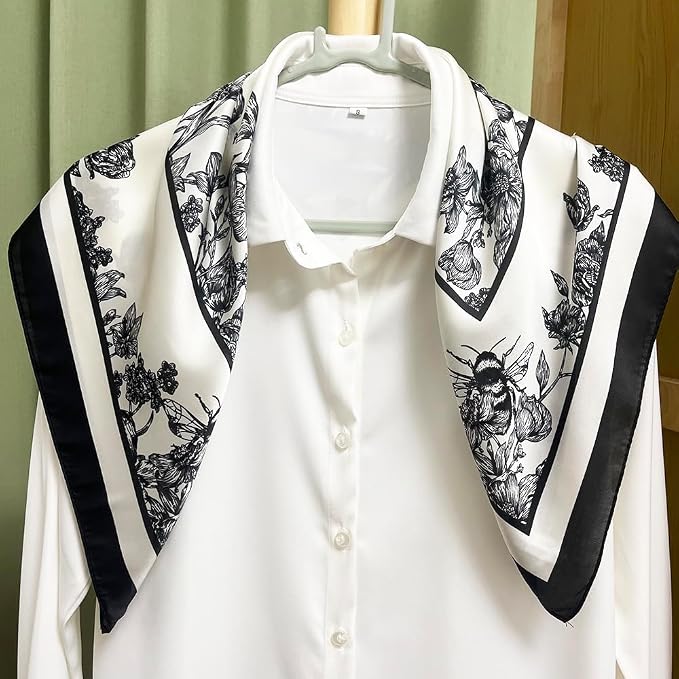
Sunglasses remain useful through most of September, especially on the sun-exposed sections of the Harbourfront.

A simple pendant necklace or a pair of statement earrings can shift a daytime outfit into something dinner-appropriate without adding another item to the suitcase.

Bags That Keep Up With a Full Sightseeing Day
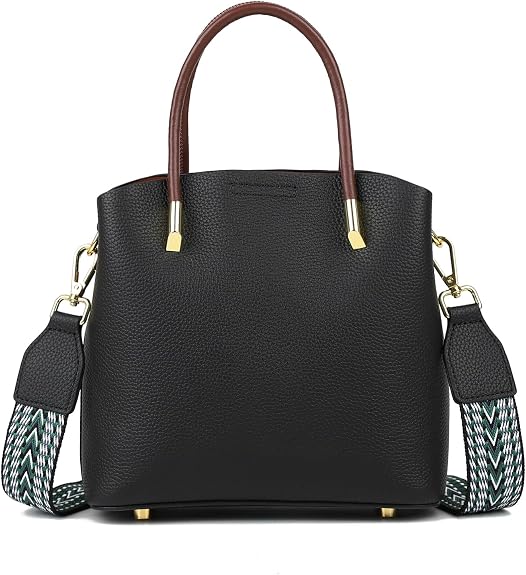
A crossbody bag with secure zippers is the most practical option for daytime exploring, particularly on busy streetcars or crowded market areas like Kensington.

It keeps hands free for coffee, transit cards, and camera phones while sitting close enough to the body to reduce the usual travel-bag worries.

For evenings, a small structured bag or clutch is usually enough, since most Toronto restaurants and bars do not require carrying much beyond a phone, cards, and lip balm.
Sun Protection for Warmer September Days
Early September sun can still be strong, particularly around midday near open spaces like Trinity Bellwoods Park or the Toronto Islands.

A lightweight sun hat, breathable long sleeves, and a reliable sunscreen routine remain relevant even as the month cools.
Fabrics Worth Prioritising for a Changeable Climate
Breathable natural fibers such as cotton, linen blends, and lightweight wool handle Toronto’s shifting September climate better than fully synthetic fabrics, which tend to trap heat during warm afternoons and feel clammy in humidity. Merino wool, in particular, is a practical choice for a light sweater, since it regulates temperature well across a wide range.
Common Clothing Mistakes to Avoid
This is where many travellers overpack in the wrong direction. Packing only summer clothing, expecting the warmth of early September to hold steady, often leaves visitors cold by the second week. On the other end, packing heavy sweaters and a thick coat wastes suitcase space that could go toward more versatile layering pieces.
Another common misstep is prioritising fashion heels over walking shoes, underestimating just how much of a typical Toronto day involves being on your feet. Finally, skipping rain protection entirely is a mistake many regret at least once during a September visit.
Outfit Repetition and Why It Is Not a Problem
Repeating a few key pieces across a week-long trip is not only normal but genuinely practical. Rotating two or three bottoms with four or five tops, plus a couple of layering pieces, creates far more outfit combinations than most travellers expect, without requiring a suitcase full of single-use items.
Building a Toronto-Ready Capsule Wardrobe
A useful capsule for this trip might include two pairs of bottoms (jeans and tailored trousers), one skirt, one versatile dress, four tops in breathable fabric, one cardigan, one overshirt, one packable rain jacket, and one blazer for evenings. This combination covers warm afternoons, cool mornings, sudden rain, and dinner plans without duplicating function.
For travellers comparing climates across a longer North American itinerary, it can help to look at how packing shifts for warmer destinations, such as this guide on what to wear in Miami in September, or a similarly transitional city covered in what to wear in New York in September.
Example One-Week Packing List
For a realistic one-week trip, a practical packing list includes two pairs of jeans or trousers, one skirt, one dress, five tops, one cardigan, one overshirt, one lightweight rain jacket, one blazer, one pair of walking sneakers, one pair of ankle boots or low heels, and a small set of accessories including a scarf and sunglasses. This list allows for roughly 12 to 14 outfit combinations without packing excessively.
Laundry, Rewearing, and Packing Light
Most accommodations in Toronto, including many short-term rentals, offer at least basic laundry access, which makes packing light considerably easier. Rewearing trousers or jeans two or three times within a week is standard practice for most travellers, and doing a small midweek laundry load often solves more packing problems than adding extra suitcase space ever could.
What to Wear on Travel Days
Travel days call for comfort first. A soft top, breathable trousers, slip-on sneakers, and a light jacket that can double as a blanket on a plane or train are usually the most practical combination. Layers matter here too, since airports and train stations are often over-air-conditioned regardless of the weather outside.
Adjusting the List for a Warmer or Cooler September
If the forecast leans warmer, prioritise breathable tops and lighter layers, and consider swapping one pair of trousers for an extra skirt or dress. If the forecast leans cooler, add a slightly heavier cardigan and consider packing tights for wear under skirts and dresses on chillier days. For a broader comparison of how packing shifts by region, this guide on what to wear in Dallas Texas in September offers a useful contrast for travellers building a multi-city itinerary. More seasonal ideas are also available in Informacian’s full What To Wear category.
Toronto in September rewards travellers who pack with flexibility rather than certainty. The city’s shifting light, its mix of glass towers and tree-lined streets, and its habit of surprising you with either sunshine or a sudden downpour all point to the same conclusion: layers, breathable fabrics, and comfortable shoes will carry you further than any single statement piece. Once the wardrobe is sorted, the only real decision left is which patio to sit on while the weather makes up its mind.


5 Responses